Educated Consumers

A senior couple talking with a caregiver

Caregivers Need to beeducated consumers

As our population ages, statistics show that most American families have one and sometimes more family members caring for their aging parents, or expect to do so in the future.

These caregivers suddenly become responsible for important decisions about a topic they know little or nothing about.

My Story isYour Story!

My parents did an excellent job of preparing for retirement: financially, legally and medically. As they began to age, things were manageable – we had the occasional trip to the emergency room or my parents would come to my house after surgery to recover.

But later after a long hospital stay, I was advised to select a “rehab facility” because my dad needed more care. I was provided a list of facilities and asked to select a rehab provider on the spot. Naturally, I wanted to make the very best decision for my dad’s recovery, so making this decision was overwhelming. I had never done this before! So instead of guessing, I decided to visit each facility to help make my decision.

When I made the visits to evaluate facilities, I didn’t know the right questions to ask. The “tours” were usually walking through the facility with the representative and chatting about the aesthetics of the building – window treatments, new carpet and other renovations- all nice, but not critical to my dad’s recovery. I did not know the questions to ask to make sure the facility was aligned with the care and services specific to my dad’s critical needs.

As time progressed and my dad eventually required other types of care (Home Care/ Home Health, Assisted Living and eventually Hospice Care), I repeated this same ineffective process.

I would meet with the providers’ representatives, ask uneducated questions, make an uneducated decision, and then manage the resulting problematic situations. I was trying to get the best care possible for my loved one, but I didn’t have the information to do it.


A woman thinking about a decision

When I spoke with other caregivers, it was clear that we were all having similar experiences — we were uneducated about managing the care of our senior loved ones.

Our single resource was seeking advice from those who had gone through this before- not an effective way to get the education we desperately needed to make these very important decisions!

As many of my friends took on the new role of caregiving, they came to me for advice. Several suggested I use what I had learned to consult with caregivers to help them navigate this complicated maze of information. I could help new caregivers become more educated, make better decisions, and avoid the stress and problems of making uniformed decisions.

One-on-one consulting intrigued me, but would limit the audience, which is much more far reaching. Because this issue affects almost every family in America, I tried to devise a way to make the information accessible to everyone.

Because of this, Seniors Resource Hub® was founded, a company that supplies Caregiver Tools that pave the way for living and care transitions.

American Caregiver Facts

Some Important Caregiver Facts You Must Know Please Check Below!

  • There are 40 million unpaid caregivers of adults ages 65 and older in the United States.
  • 17% of the US workforce are caregivers and that number is rising as 10,000 baby boomers turn 65 a day.
  • Most adult children provide care to one maybe two seniors, usually parents. After they have accumulated the knowledge to be a good caregiver, typically they never use that knowledge again. People that are new to caregiving, usually learn “on the job” and reinvent the wheel of their predecessors.
  • Approximately one of every eight Americans aged 40 to 60 is both raising a child and caring for a parent.
  • US citizens aged 65 or older will double by the year 2030, to over 70 million.
  • Most caregivers are uneducated consumers when it comes to selecting Home/Home Healthcare and residential care such as Assisted Living, Skilled Nursing/Rehab as well as Hospice and Palliative Care.

In the 21st century many consumers are better informed than ever when it comes to making decisions. For example, consumers are savvy at purchasing a home office printer which is typically less than $200, but not so much when making a care or living decision for a senior which could range from a few hundred dollars for limited Home Care to hundreds of thousands of dollars for Assisted Living, Memory Care and/or Skilled Nursing. The risks of being an uneducated caregiver making care and living decisions include:

  • Care and services are not aligned to meet current and future needs of seniors.
  • Assumption that all senior care providers are bad, so it doesn’t matter if you’re an educated consumer.
  • Caregiver spends time managing issues/problems instead of spending time with their senior, spouse, children or grandchildren.
  • Stress levels are increased and can take a toll on the caregiver’s health.
  • Educated caregivers have become more relevant due to the rapid growth of the over 65 market.
  • Assumption that a certain provider has in the past had a “good reputation” so you make a decision on hearsay not on current situation.

How do you become a knowledgeable consumer for senior care and living?

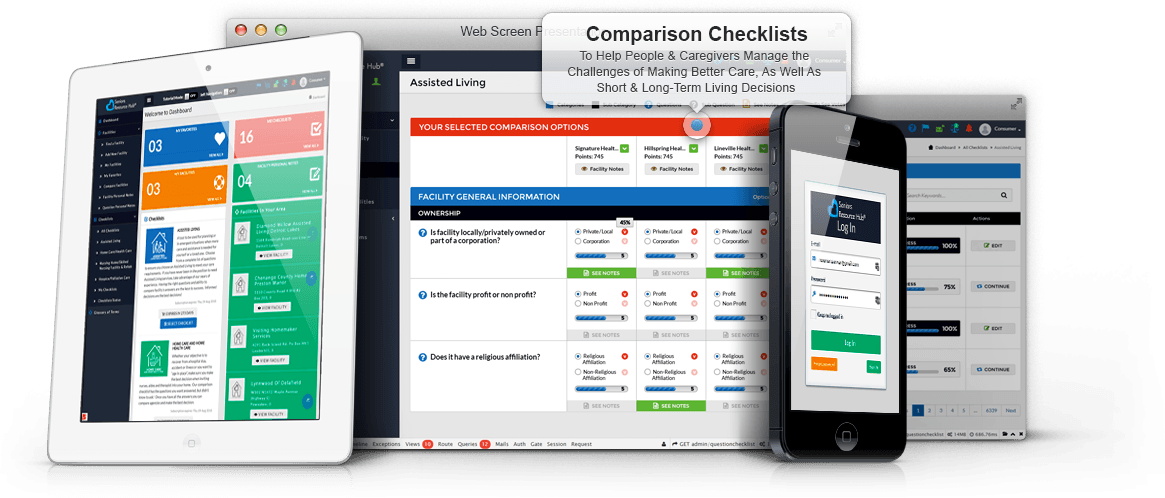
The comparison checklists on a tablet, laptop and phone

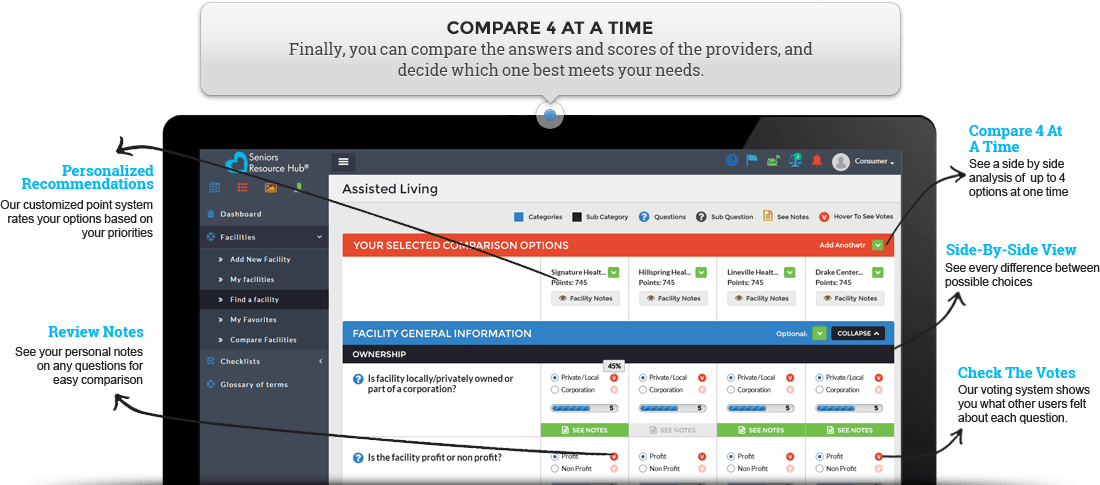
Caregivers need to know the right questions to ask, and a way to compare the answers provided by the senior living and care providers to make the best decisions possible. Our first Comparison Checklist focused on Assisted Living. Later, we developed
Skilled Nursing and Rehab, Home Care and Home Healthcare, and Hospice and Palliative Care Comparison Checklists in a paper-based format. And in 2018, the Comparison Checklists were released as Web Apps!
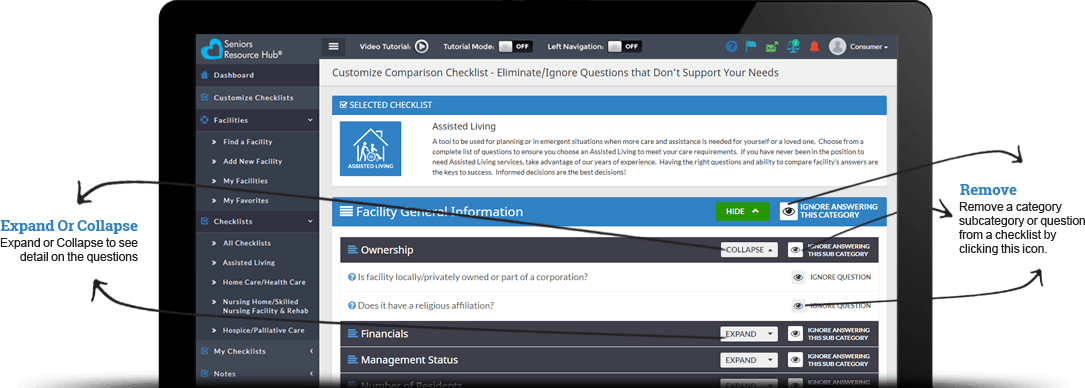
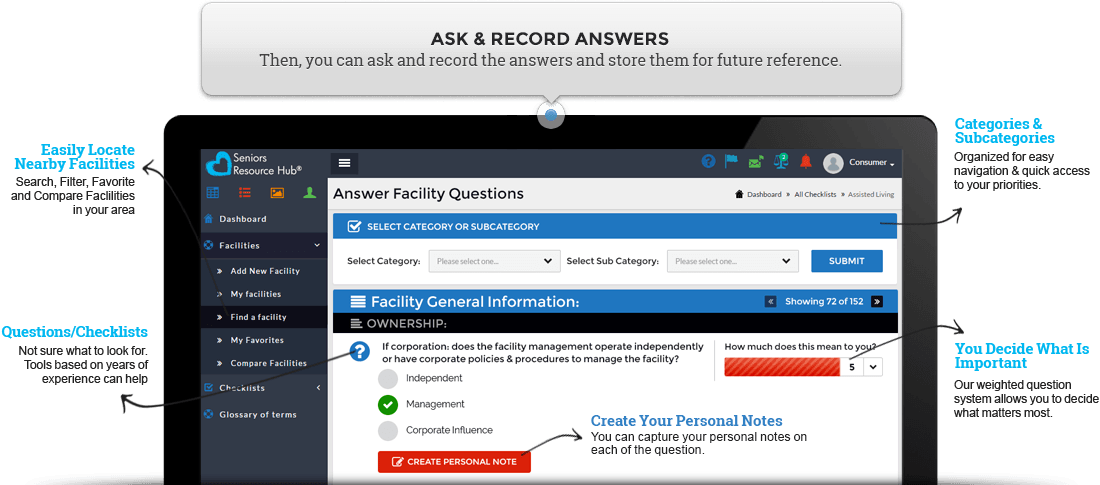
With a subscription to the easy-to-use Apps, you can customize your question set and ask only the questions that apply to your situation.

Customize Comaprison
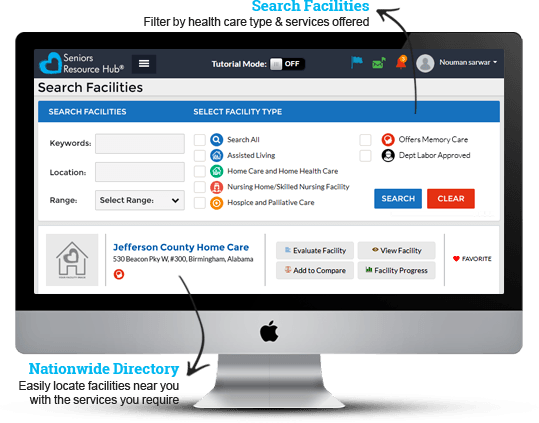
Search Facility

Search Facilitiesnationwide!

Next, you can search a nationwide database of providers to evaluate and compare them to make the best decisions for your loved one.

Customized Comparison

How Do the Comparison Checklist Web Apps Help Caregivers?

  • Increases Knowledge:

    There are 40 million unpaid caregivers of adults ages 65 and older in the United States.

  • Lessens Frustration:

    Lessens frustration with a simplified method to answer complicated questions.

  • Reduces Anxiety:

    Reduces anxiety with an easy-to-use tool to navigate difficult life decisions.

  • Eliminates Guilt:

    Eliminates guilt by ensuring decisions are based on the most current and accurate information.

The solution provides Peace of Mind that the choices you make will ensure the best care possible for your loved one.

More information about Seniors Resource Hub® can be found at www.seniorsresourcehub.com and to watch a short “How It Works” video click on button below.

WATCH VIDEO!